 deutsch
 Esperanto

|
deutsch
Esperanto
|
|
Mia Toyota GAIA kaj sia granda vojaĝo de Japanio al Germanio kaj reen |
 |
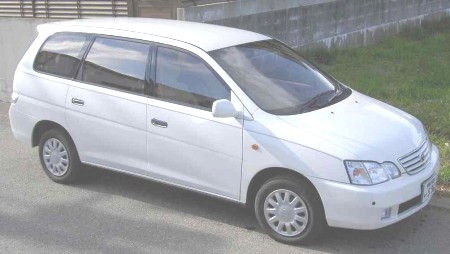 |
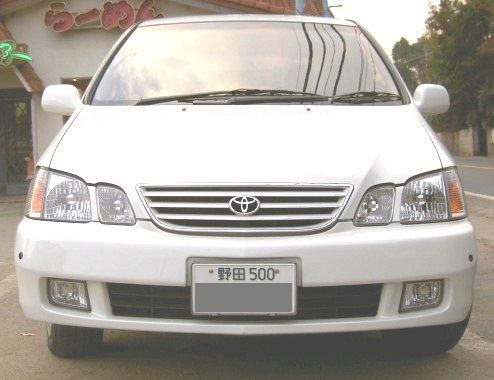
| Marto 2001: mia "Toyota GAIA", en Japanio disvastiĝinta tipo de aŭtomobilo, ĉi-fote ankoraŭ en Japanio kun japanaj numerplatoj | |
 |
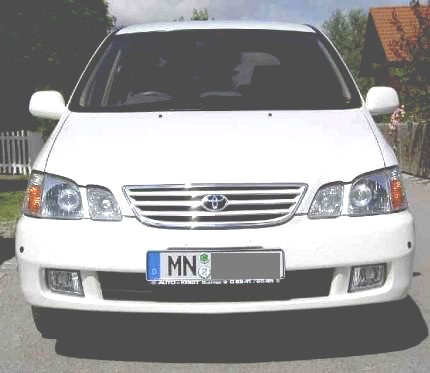 |
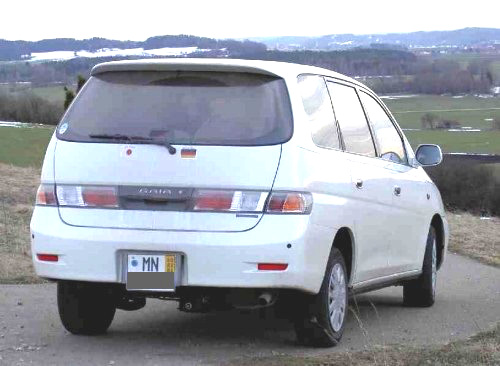
| Februaro 2004: alveno en Suda Germanio post 2-monata marvojaĝo | kun modifigitaj lumĵetiloj kaj germanaj numerplatoj |
| Poste en Germanio mi gluis ekstran firmaosignojn de Toyota al ĝia malantaŭo, ĉar mi ofte estis demandata "Kia aŭto estas tio ??" | |
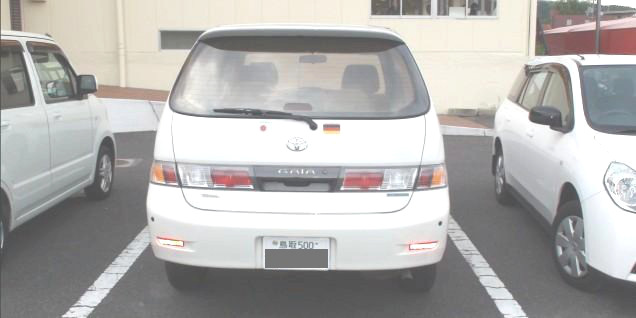
| Toyota GAIA, tipo GF-SXM15G-BPSEK, ekipa varianto "Limited Navi Special", perlblanka, modelo de 2000, produktita en 2001 | ||
| Tekniko: | 1998 cc, 135 ĈP (99kW/6000rpm, 181,4N×m/4400rpm), kvartakta 4-cilindra benzina motoro kun 16 valvoj kaj regulita katalizilo, TCCS, aŭtomata transmisiilo kun 4 rapidumoj kun regstango ĉe la stirrado, fronta movigo, ŝaltebla komputilregulita kvarrad-movigo (4WD ATC = angle: "Active Torque Control"), stirrado dekstre, antaŭe diskbremsoj, malantaŭe tamburbremsoj, ABS, 2 aersakoj, 4 per ŝtalbalkoj kontraŭ flanka kolizio plifortigitaj pordoj kun integrataj laŭtparoliloj kaj elektraj fenestro-moviloj, granda pobklapo, ses apartaj seĝoj por 6 personoj, ĉiu seĝo kun tripunkta balteo de sekurigo, alĝustebla dors-apogilo, alĝustebla kap-apogilo kaj trinkaĵ-apogilo, la seĝoj estas en 2-2-2-aranĝo - tiel oni povas kliniĝante trairi de antaŭe ĝis malantaŭe tra la libera mezo (kontraŭe al tio la plej multaj GAIA-j estas 7-sidlokaj en 2-3-2-aranĝo, kie la larĝaj seĝoj de la dua sidvico kontaktas kune kaj malebligas la trapaso), aŭtomata klimatizilo, plie poba malvarmigilo (angle: "Rear-Cooler") por la tria sidvico, radiotelefunkciiga centra riglilo, 2 kontraŭnebulaj lumĵetiloj, 4 postlumoj, ĉiuj antenoj estas integrita en la malantaŭaj fenestrovitroj, ambaŭ retrospeguloj elektre alĝusteblaj kaj elektre klapeblaj. Longo 4620mm, larĝo (sen retrospeguloj) 1695mm, alto 1665mm (modelo sen tegmenta balustrado), rada bazo 2735mm, propra pezo 1500kg, maksimuma rapido: 180 km/h (aktiva limigilo) | |
| Ekstraĵoj: | enmuntita per la produktanto:
meze en la instrumenta panelo integrita kolora ekrano, posta kamerao (retroveturi-asisto),
stereofonia sistemo kun 6-obla kompaktdisk-ŝanĝilo,
KD-bazita naviga sistemo kun "VICS" kaj voĉa navigado (funkcias bedaŭrinde nur en Japanio),
TV-ricevilo por analoga NTSC (sed en Japanio la analoga tera NTSC ne estas plu elradiata), enmuntita per la komercisto: ene lumantaj numerplatoj fronte kaj malantaŭe kun cifroj el verda vitro (ili estis substituata en Germanio per normalaj numerplatoj), ultrasonaj sensoroj ĉe ĉiuj kvar anguloj (parki-asisto), kaj la plej ekzota ekstraĵo de mia Gaia: la maldekstra fronta seĝo estas substituita per elektra lev-seĝo de Toyota, speciale modifigita por Germanio (kaj nun denove forigita): frontaj lumĵetiloj adaptitaj por dekstraflanka trafiko (vidu supran foton), kontraŭnebula postluma funkcio, maldekstre antaŭa kamerao (preterpasi-asisto por dekstraflanka trafiko) | |
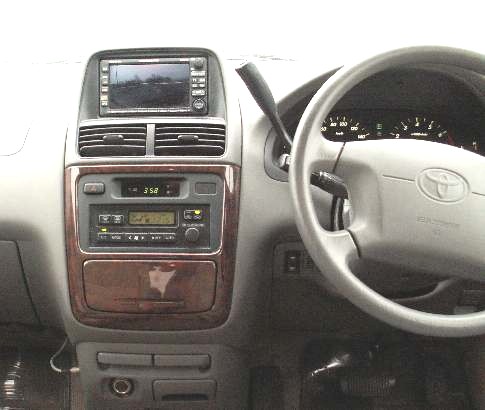 la meza konzolo kaj parto de la ŝoforejo |
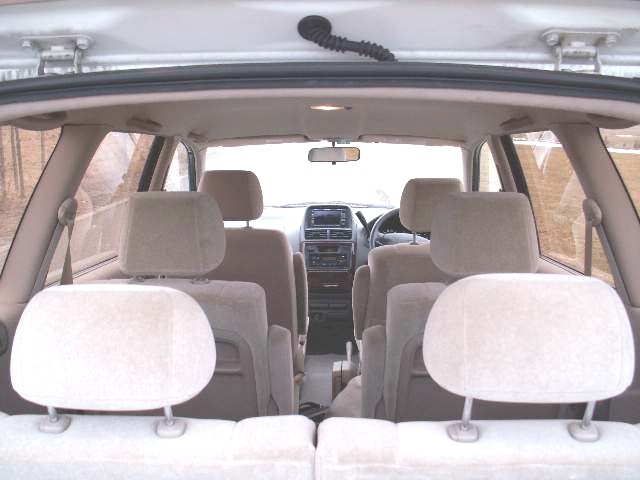 vido tra la malfermita pobklapo |

La modelo GAIA estis produktata per Toyota ekde majo 1998 ĝis septembro 2004 (entute 154572 veturiloj).
Ĝi estis modelaj variantoj kun 2,2-litro-dizelmotoro aŭ 2,0-litro-benzinmotoro, kun fronta movigo kune kun aŭ
sen ŝaltebla kvarrada movigo (AWD "ATC"), kun fermita tegmento aŭ kun unu aŭ du transparentaj ŝoveblaj tegmentoj,
kun aŭ sen tegmenta balustrado,
kun aŭ sen kolor-ekrano integrita meze en la instrumenta panelo, kun aŭ sen posta kamerao,
kun aŭ sen naviga sistemo de Toyota (tiu sistemo uzis kompaktan diskon ĝis mia modelo aĉetita marton 2001,
kaj ekde aprilo 2001 uzis DVD-on). Haveblas la modelo GAIA en diversaj koloroj,
precipe en perlblanka, ĉampano-ora, arĝent-metala, vinruĝa, malhela verda, turkisa, kaj nigra.
La formo de la karoserio estas same por ĉiuj GAIA-j, sed po modela jaro ekzistas malgrandaj modifigoj ĉe la
lumoj kaj ĉe la radiatorkrado. Ekde 2002 la meza bremslumo iĝis integrata en la tegmenta spoilero kiel
LED-ĉeno, antaŭe
ĝi estis normala lumo en la malantaŭa fenestro.
Pro tio ke la seĝoj estas daŭre enmuntitaj, jam ĉe la aĉeto oni devis elekti aŭ
la 6-sidan aŭ la 7-sidan
ekipan varianton. La du seĝoj de la tria sidvico estas uzeblaj ankaŭ per plenkreskuloj kun staturo de iomete pli ol 180cm,
ĉar ekzistas sufiĉe da kapospaco, kaj ankaŭ la kap-apogiloj kaj la dors-apogiloj estas aparte alĝusteblaj.
Krome ĉiuj dorsapogiloj klapeblas ankaŭ antaŭen por pligrandigi la pakaĵspacon.
La variantoj de GAIA kun "SXM10G" en la tipa numero havas nur frontan movigon, la variantoj kun "SXM15G"
kontraŭe havas frontan movigon kun ŝalteblan kvarradan movigon (kiel la mia).
Kiam tiu kvarrada movigo nomita "aktiva turnmomanta kontrolo" (angle: "Active Torque Control")
estas aktiva, komputilo kalkulas kontinue la ABS-impulsoj de la radoj por kontroli la rapidecojn de ĉiuj radoj,
kaj nur kiam la komputilo dekovras rapidecan malsamecon inter la frontaj kaj pobaj radoj, la
elektromagneta kluĉo en la kardanŝafto aktiviĝas por movigi ankaŭ la poban diferencialon kaj la pobajn radojn.
La en Japanio kaj ankaŭ en Germanio vendita modelo RAV 4 kontenas similan kvarradmovigan teknikon.
Paralele al modelo GAIA en Japanio ekzistas la fratina modelserio "IPSUM" (prononcu japane "ipsam"). En tiu serio jam du grandaj
modelŝanĝoj okazis, tiel ke oni nun distingeblas inter tri diferaj IPSUM-oj (la modeloj kun la 2,4-litro-motoro nomiĝas ankaŭ
"IPSUM 240 serio"):
| Japana modelo | Eksporta modelo | Rilato inter la GAIA kaj la IPSUM | ||
| Modela nomo (Produktada periodo) longo×larĝo×alto |
Motoroj kaj movigoj |
Modela nomo (Produktada periodo) - |
Motoroj kaj movigoj |
Karoseriodezajno, interno |
| IPSUM ¹ (1996-2001) 4530×1695×1620mm* |
2000cc (benzino) 2200cc (dizelo) laŭ elekto fronta movigo aŭ kvarrad-movigo* |
Picnic (1996-2001) | 2000cc (benzin) 2200cc (dizelo) nur frontrada movigo |
La IPSUM ¹/Picnic kaj la GAIA havas preskaŭ la saman ĉasion, la samajn motorojn kaj la samajn transmisiilojn, sed la karoseriodezajno estas tre malsama. |
| GAIA (1998-2004) 4620×1695×1640mm* |
2000cc (benzino) 2200cc (dizelo) laŭ elekto fronta movigo aŭ kvarrad-movigo* |
ne eksportita per Toyota al aliaj landoj |
La GAIA estas 9 cm pli longa ol la IPSUM ¹/Picnic. Karoseriodezajno videble malsamas al la IPSUM ¹/Picnic. | |
| IPSUM ² (2001-2007) 4670×1760×1660mm* |
2400cc (benzino) (neniu dizelo) laŭ elekto fronta movigo aŭ kvarrad-movigo* |
Avensis Verso (2001-2007) | 2000cc (benzino) 2200cc (dizelo) nur frontrada movigo |
Karoseriodezajno malsama de la GAIA kaj de la IPSUM ¹, interne multaj diferencoj, ekz. la 3-a seĝovico estas alie konstruita. Nur la motoroj de la eksporta versiono kongruas ankoraŭ al la GAIA kaj al IPSUM ¹/Picnic. |
| IPSUM ³ (2007-2009) 4690×1760×1660mm* |
2400cc (benzino) (neniu dizelo) laŭ elekto fronta movigo aŭ kvarrad-movigo* |
ne eksportita per Toyota al aliaj landoj |
Karoseriodezajno fronte kaj flanke tre simila al GAIA, tre okulfrapa estas ankaŭ la simileco en la interno. Nur la malantaŭo memorigas ekstere ankoraŭ al IPSUM ² resp. al Avensis Verso. | |
| Lingvo: |
deutsch
Esperanto ,
al mia hobia paĝo
|